


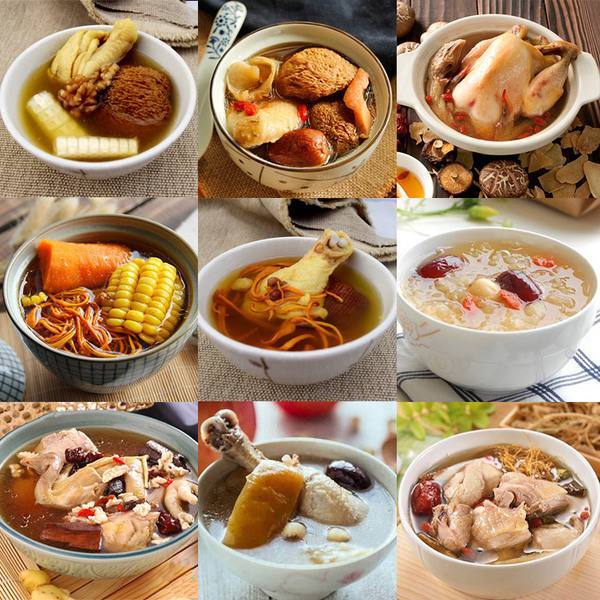
In today’s fast-paced world, staying up late, relying on takeout, and feeling anxious have become the norm. As a result, sub-health issues such as hair loss, fatigue, and digestive discomfort are increasingly common, leading more and more people to prioritize wellness. True wellness is not about blindly taking supplements, but rather about harmonizing with nature, nurturing both body and mind, and cultivating vital energy in daily life.
The core of Traditional Chinese Medicine wellness lies in aligning with the four seasons and responding to the rhythms of heaven and earth. In spring, when all things sprout and grow, it is advisable to soothe the liver and strengthen the spleen. You may choose celery and Chinese chard, combined with chrysanthemum, dried tangerine peel, and rose petals, boiled into a tea to aid in the smooth flow of liver qi and harmonize the spleen and stomach. In summer, when the heat is intense, it is advisable to clear heat, relieve summer heat, and protect body fluids. One must avoid excessive consumption of cold foods and prolonged exposure to air conditioning, which can damage yang energy. Consuming mung bean soup or winter melon and kelp soup, combined with lotus leaf, honeysuckle, mint, and patchouli, can help clear summer heat and promote diuresis. Autumn’s dryness can easily damage the lungs, so it is advisable to moisten the lungs and alleviate dryness. Pears, white fungus, lily bulbs, and honey are excellent choices. You can add glehnia root, solomon’s seal, and ophiopogon to make soups or congees to calm the mind and nourish the lungs. In winter, when the weather is cold, one should focus on internal warming and tonification. It is advisable to go to bed early and rise late to accumulate energy. Soups such as Angelica, Ginger, and Lamb Soup or Astragalus Stewed Chicken, combined with red dates, longan, goji berries, and walnuts, warm and nourish the internal organs, tonify the kidneys, and boost vital energy, thereby building up vitality for the coming year. By following seasonal dietary therapy and aligning the body with the rhythms of nature, one can reduce illness and pain at their root.
The key to nurturing health lies in regulating the spleen and stomach to strengthen the foundation. As Li Dongyuan noted in 《Treatise on the Spleen and Stomach》: “The spleen and stomach are the root of postnatal life and the source of the generation of qi and blood.” Modern people often have irregular eating habits, overeat, and crave spicy and greasy foods, which easily damage the spleen and stomach, leading to qi and blood deficiency, a sallow complexion, and fatigue and drowsiness. Nourishing the spleen and stomach emphasizes “nourishment” rather than “tonification”; meals should be taken at regular times and in appropriate portions. Millet porridge combined with Chinese yam, lotus seeds, and poria helps strengthen the spleen, stop diarrhea, calm the mind, and nourish the heart; Steamed pumpkin nourishes the middle burner and boosts qi; stewed or steamed Chinese yam tonifies the spleen and nourishes the stomach; porridge made with euryale seed, Job’s tears, and adzuki beans dispels dampness and strengthens the spleen; for those with spleen-stomach deficiency-cold, regularly drinking ginger-jujube tea or codonopsis-astragalus decoction can warm the middle burner, dispel cold, and tonify qi to strengthen the spleen. Dietary tonification is superior to medicinal tonification; when the spleen and stomach function properly, qi and blood are abundant, and the body naturally becomes robust.
The foundation of health preservation lies in nurturing the spleen and stomach. When the spleen and stomach are healthy, qi and blood are abundant, and one’s vitality is robust—only then can true health be established.


 Send Email
 WhatsApp