


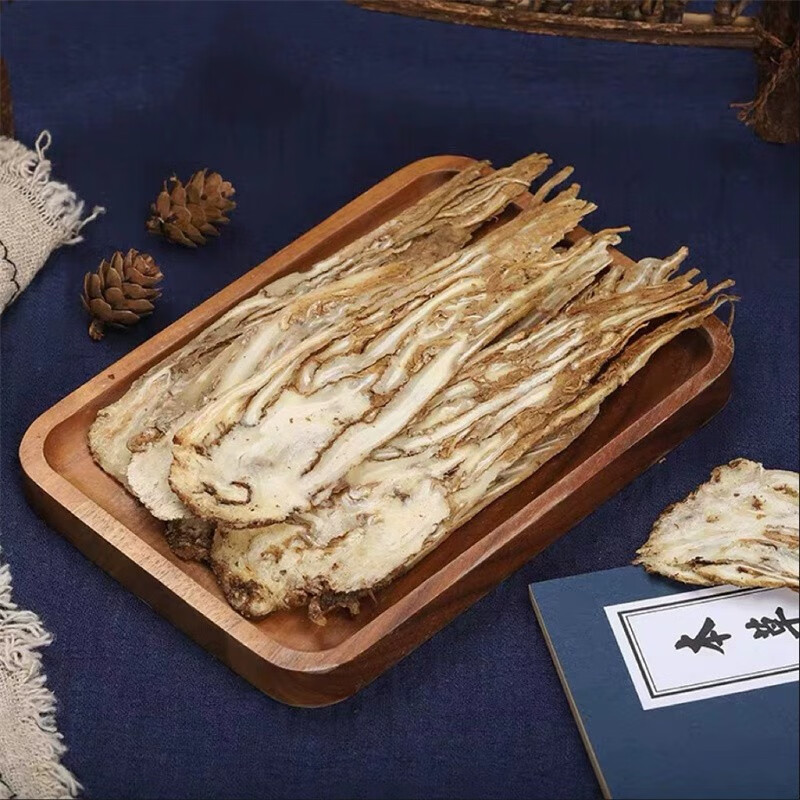

Angelica sinensis :Nourishes and invigorates the blood; a symbol of homecoming
Angelica sinensis is the dried root of a plant in the Apiaceae family. It is harvested in late autumn, with fibrous roots and soil removed. After allowing some moisture to evaporate, the roots are bundled into small bundles, placed in a shed, and slowly dried using smoke.
It is primarily produced in Gansu, Sichuan, and Yunnan, with the highest quality coming from Minxian County in Gansu, which is renowned as the “Hometown of Chinese Angelica.” It has a sweet and pungent taste, a warm nature, and enters the Liver, Heart, and Spleen meridians. It is an extremely commonly used tonic herb in clinical Traditional Chinese Medicine.
According to the 《Pharmacopoeia of the People’s Republic of China: Part I, 2020 Edition》, this herb is slightly cylindrical in shape, with 3–5 or more lateral roots at the base, measuring 15–25 cm in length. The surface is light brown to dark brown, featuring longitudinal wrinkles and transverse, lenticular protrusions.The root head (Gui Tou) has a diameter of 1.5–4 cm, with annular rings; the upper end is rounded and blunt, or bears several prominent rhizome scars, along with purple or yellow-green remnants of stems and leaf sheaths. The main root (Gui Shen) has an uneven surface. The lateral roots (Gui Wei) have a diameter of 0.3–1 cm, are thicker at the top and thinner at the bottom, are often twisted, and bear a few traces of fibrous roots.The texture is supple and resilient; the cross-section is yellowish-white or pale yellowish-brown, with a thick cortex containing fissures and numerous brown punctate secretory cavities; the xylem is paler in color, and the cambium ring is yellowish-brown. It has a strong aroma and tastes sweet, pungent, and slightly bitter.
However, it is important to note that specimens with a harsh, woody texture, those that are dry and devoid of oil, or those with a greenish-brown cross-section should not be used for medicinal purposes.
Reasons for recommending Angelica sinensis:
1. It is widely renowned and has a broad range of applications. It is the premier herb in gynecology and a supreme tonic for blood.
2. Clear therapeutic effects, including blood tonification, blood circulation promotion, menstrual regulation, pain relief, and bowel lubrication.
3. Classic and versatile in formulation, with a wide range of applications. It can be used to produce products such as Angelica Blood-Nourishing Pills, Angelica Liquid Extract, Angelica Menstrual Regulation Granules, Angelica Blood-Nourishing Oral Solution, and Four Substances Decoction.
Functions of Angelica sinensis:
Angelica sinensis’ primary functions are to nourish and invigorate blood, earning it the title of “the supreme blood-nourishing herb.” For those with a sallow complexion, dizziness, palpitations, or deficiency of qi and blood, Angelica sinensis nourishes the nutritive blood and replenishes the blood vessels, making it the cornerstone herb for treating blood deficiency syndromes.At the same time, Angelica sinensis is pungent and warm in nature, promoting circulation and dispersing stagnation. It can invigorate blood, unblock the meridians, dispel cold, and relieve pain. It is commonly used for gynecological conditions such as irregular menstruation, amenorrhea, dysmenorrhea, and postpartum abdominal pain caused by blood stasis, earning it the title of “the supreme herb for gynecology.”
Furthermore, Angelica sinensis can moisten the intestines and relieve constipation, making it particularly suitable for dry-bowel constipation caused by blood and body fluid deficiency. It achieves this effect by replenishing blood and alleviating dryness without harming vital energy. In dietary therapy, Angelica, Ginger, and Lamb Soup is a classic warming tonic formula. It is suitable for those with a cold-deficiency constitution, who fear the cold and have cold hands and feet, to consume during winter. It warms the middle burner, nourishes blood, dispels cold, and relieves pain.
From a modern pharmacological perspective, Angelica sinensis contains various active components such as essential oils, ferulic acid, and polysaccharides. It promotes hematopoiesis, improves microcirculation, exhibits antioxidant properties, and regulates the immune system, making it widely used in both health maintenance and clinical settings.
The name “Angelica” also carries the beautiful connotation of “one should return,” embodying longing and anticipation. This makes it not only a valuable medicinal herb but also a symbol rich in cultural significance.


 Send Email
 WhatsApp